
High strength anchor bolts connect steel columns, machinery, equipment bases and structural components to concrete foundations. A reliable order requires more than a diameter and length: buyers must define the anchor shape, steel grade, thread, embedment, coating, nut and washer assembly, testing and installation conditions. This guide explains the key purchasing points for L-shaped, hooked and eye-type foundation anchor bolts.
What Is a Foundation Anchor Bolt?
A foundation anchor bolt is embedded in concrete or installed through a designed anchoring system to transfer tension, shear and combined loads from a connected component into the foundation. The threaded end projects above the concrete so a base plate, bracket or machine frame can be secured with nuts and washers.
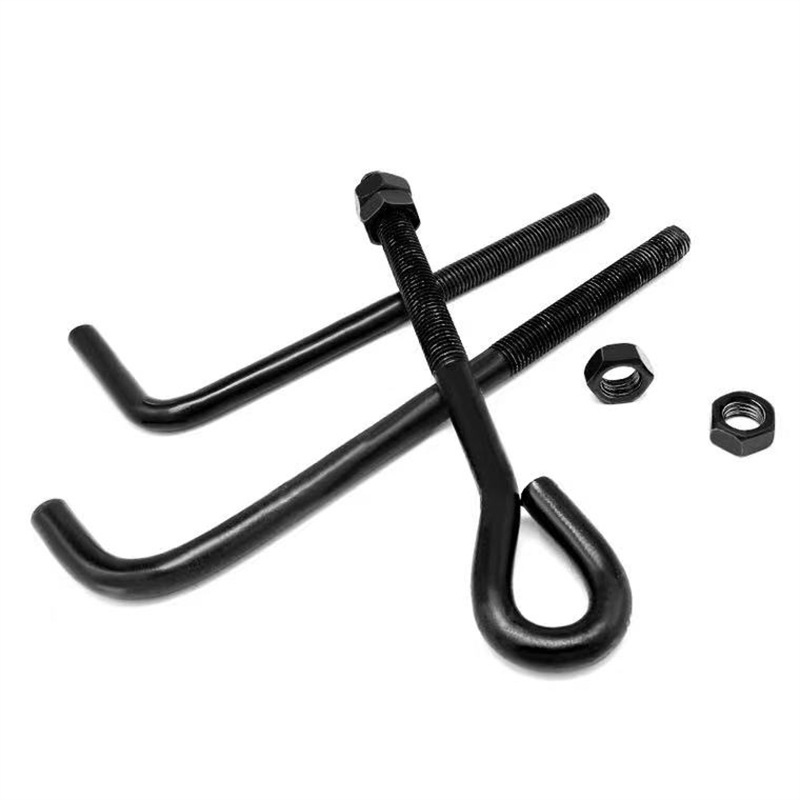
The supplied photograph shows black anchor-bolt assemblies with threaded ends and hex nuts. Visible shapes include L-type bent anchors and an eye or loop-ended design. No steel-grade marking, coating specification or dimensions are visible, so those requirements must be confirmed from the engineering drawing and purchase order.
Common Anchor Bolt Types
L-Shaped Anchor Bolts
L-shaped anchor bolts have a straight threaded end and a bent embedded end. The bend provides mechanical anchorage within the concrete. They are commonly specified for steel columns, light poles, equipment frames, industrial structures and general foundation work.
J-Bolts and Hooked Anchor Bolts
J-shaped or hooked anchors use a deeper curved end. Their geometry, bend radius and embedment must follow the design drawing because these details influence placement, concrete cover and load transfer.
Eye and Loop Anchor Bolts
Eye or loop-ended anchor bolts provide an enlarged embedded shape or a connection point for a project-specific assembly. They are not interchangeable with lifting eye bolts unless the complete component is specifically designed, tested and approved for lifting.
High Strength Grades and Materials
Anchor bolts may be manufactured from carbon steel, alloy steel or stainless steel, depending on structural loads and environmental exposure. “High strength” should be supported by a defined material specification, property class or mechanical requirement—not by surface color. Common project specifications may reference standards such as ASTM F1554 grades, metric property classes or customer drawings.
For safety-critical foundations, the engineer should define yield strength, tensile strength, elongation, impact requirements where applicable, weldability, heat treatment and certification. Substituting a higher-strength steel without design approval can create problems with ductility, welding, thread behavior or concrete failure mode.
Dimensions Buyers Must Specify
- Thread diameter, pitch and tolerance
- Overall length and required projection above the concrete
- Threaded length and unthreaded shank length
- Bend angle, inside radius and hook or leg length
- Eye or loop dimensions for special designs
- Embedment depth and base-plate stack thickness
- Nut, washer and template requirements
- Dimensional tolerances and inspection method
A complete drawing is the safest way to avoid confusion. For bent anchors, “length” may be interpreted differently unless the drawing clearly identifies reference points and bend dimensions.
Black Finish, Galvanizing and Corrosion Protection
The pictured products have a black surface, but appearance alone cannot identify black oxide, paint, phosphate or another treatment. Black finishes may be appropriate for protected indoor or fully embedded applications, yet exposed threads and base-plate zones often require stronger corrosion protection.
Hot-dip galvanizing is commonly considered for outdoor foundations, towers, guardrails and humid environments. Zinc plating, zinc flake coatings, epoxy systems and stainless steel may also be specified. Coating thickness affects thread fit, so galvanized anchor bolts normally require compatible oversize-tapped nuts and controlled assembly details where the applicable standard calls for them.
Applications
- Steel building columns and structural base plates
- Industrial machinery and equipment foundations
- Pipe racks, HVAC equipment and MEP support frames
- Light poles, signs, barriers and guardrail systems
- Towers, storage systems and renewable-energy structures
- Precast concrete and custom construction assemblies
Installation and Safety Considerations
Anchor-bolt capacity depends on the complete anchorage design, including concrete strength, edge distance, spacing, embedment, base-plate geometry, grout, reinforcement, installation tolerance and applied loads. Bolt strength alone does not determine the capacity of the connection. Structural and safety-critical anchorage must be designed and approved by a qualified engineer.
- Use a rigid setting template to control bolt spacing and vertical alignment.
- Protect threads during concrete placement and curing.
- Verify projection, embedment and orientation before pouring concrete.
- Do not heat-bend, weld or straighten high-strength anchors without an approved procedure.
- Use the specified nuts, washers, lubrication and tightening method.
- Record installation inspections for critical foundation work.
Quality Inspection for Bulk Orders
A practical inspection plan can include raw-material verification, dimensional checks, thread gauges, bend geometry, mechanical testing, coating inspection and traceability. For custom anchor bolts, approve a sample or first-article inspection report before full production.
- Material: steel grade, heat number and certificate requirements.
- Mechanical properties: yield, tensile, elongation, hardness and test method as specified.
- Dimensions: diameter, pitch, length, thread length, bend radius and leg geometry.
- Threads: GO/NO-GO gauge inspection and protection during packaging.
- Coating: type, thickness, adhesion and corrosion criteria.
- Packaging: tagged bolt sets, nuts and washers, templates, pallets and shipping marks.
How to Request an Accurate Anchor Bolt Quotation
Send the drawing, anchor type, diameter, pitch, total length, thread length, bend dimensions, material grade, coating, nut and washer requirements, quantity, packaging, destination and certificates. Include the base-plate layout or setting-template drawing when templates are required. Shenhui can review standard and custom anchor-bolt requirements for bulk production and export supply.
Explore our anchor bolt range, industrial bolts, compatible nuts and washers. For drawings, OEM dimensions and project packaging, review our fastener services or request a quotation.
Frequently Asked Questions
What is the difference between an L-bolt and a J-bolt?
An L-bolt uses an angled bent leg, while a J-bolt uses a deeper curved hook. The required geometry and embedment must follow the project drawing and anchorage design.
Does a black anchor bolt automatically have high strength?
No. Surface color does not confirm material grade or mechanical strength. Buyers should specify the grade and request the required test documents.
Can anchor bolts be hot-dip galvanized?
Yes. Hot-dip galvanizing is widely used for outdoor corrosion protection, but coating allowance, nut fit and project requirements must be specified correctly.
How is anchor-bolt length measured?
The reference points can vary with the anchor shape. A dimensioned drawing should define total length, threaded length, hook dimensions, bend radius and required projection.
Can custom anchor bolts and setting templates be supplied?
Custom diameters, lengths, bends, threads, coatings, bolt assemblies and setting templates can be evaluated from approved drawings and project specifications.
Need high strength anchor bolts for a construction or equipment foundation? Send your drawing and quantity to Shenhui Fasteners for technical review and export pricing.