
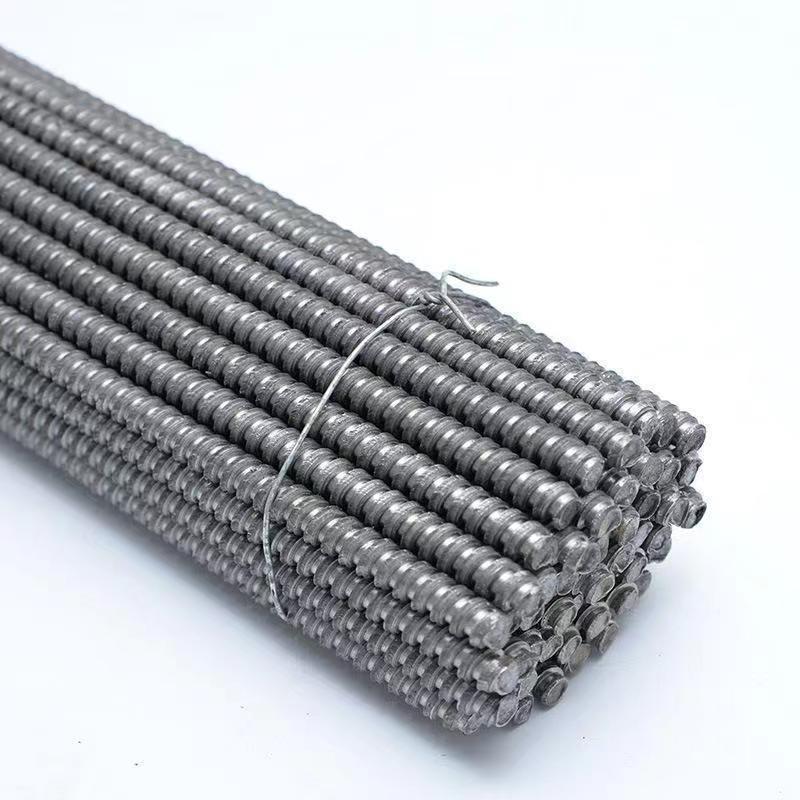
Concrete formwork tie rods—also called formwork threaded rods, through-wall tie rods, shuttering tie rods or form ties—are temporary tension members used to hold opposing wall-form panels at a controlled distance while fresh concrete is poured. For contractors, formwork suppliers and construction-material distributors, choosing the correct diameter, thread profile, length and compatible accessories is essential for dimensional accuracy, safe installation and efficient reuse.
SHENHUI manufactures and supplies formwork tie rods in standard and customized sizes for concrete walls, columns, retaining structures and civil-engineering projects. Bulk supply, cut-to-length production, compatible nuts and OEM packaging are available for overseas buyers.
What Is a Concrete Formwork Tie Rod?
A formwork tie rod passes through or across two opposing formwork panels. When fitted with suitable wing nuts, anchor nuts, washers or wall-tie accessories, the rod resists the lateral pressure generated by wet concrete and helps maintain the specified wall thickness. After the concrete reaches the required strength, removable systems can be dismantled for the next pour.
Unlike ordinary fine-pitch threaded rod, many concrete formwork systems use a robust coarse or trapezoidal thread. The deeper thread profile is easier to handle on construction sites, tolerates dirt and concrete residue better, and allows rapid tightening with purpose-designed formwork nuts. The exact thread form and component combination must be confirmed before ordering because accessories from different systems are not always interchangeable.
Typical Applications
- Cast-in-place reinforced-concrete walls and shear walls
- Basements, foundations and retaining walls
- Bridge piers, tunnels and civil-engineering formwork
- Concrete columns, tanks and structural cores
- Reusable steel, timber and plywood shuttering systems
- Temporary bracing and heavy-duty formwork assemblies
Common Sizes and Specification Points
There is no single universal size for every project. Common purchasing enquiries often include 12 mm, 15/17 mm, 16 mm, 17 mm and 20 mm system sizes, with lengths selected according to wall thickness, formwork depth and the required allowance for nuts and washers. Actual thread diameter, core diameter, pitch and working capacity vary by system and manufacturer.
| Specification item | What the buyer should confirm |
|---|---|
| Nominal diameter | Required system size and actual measured diameter |
| Thread profile | Coarse, trapezoidal or project-specific formwork thread |
| Length | Standard stock length or custom cut length |
| Material/strength | Required steel grade, tensile capacity and safety factor |
| Surface condition | Plain, black, zinc plated or other specified treatment |
| Accessories | Wing nuts, anchor nuts, washers, cones, sleeves and water stops |
| Packing | Bundles, pallets, labels and export-mark requirements |
Dimensions and load ratings should always be verified against the approved formwork design. A nominal description alone is not enough for safety-critical work. Buyers should send drawings, samples or complete dimensional data when matching an existing system.
Formwork Tie Rod System Components
Wing Nuts and Anchor Nuts
Formwork nuts transfer the tensile force from the rod to the formwork frame or bearing plate. The nut thread must match the tie rod exactly. Large bearing surfaces or separate plates help distribute the load and reduce local damage to timber or plywood panels.
PVC Sleeves and Cones
A sleeve can prevent direct bonding between the rod and concrete, making rod removal easier. Cones help position the sleeve and create a neat recess that can be sealed after stripping. For water-retaining or basement structures, sealing details must follow the project specification.
Water Stops
Where water penetration is a concern, the design may require a non-removable center section or welded water-stop plate. The correct system depends on wall function, waterproofing method and engineering requirements.
How to Select the Correct Tie Rod
- Calculate form pressure. Concrete placement rate, temperature, mix properties, vibration and pour height influence lateral pressure.
- Confirm the designed tie spacing. Horizontal and vertical spacing must match the engineering design and the capacity of the complete system.
- Match the thread and accessories. Rods and nuts must engage fully without cross-threading or excessive play.
- Allow enough working length. Include wall thickness, panel thickness, walers, washers, nuts and installation clearance.
- Specify the required capacity. Do not substitute an unverified rod based only on appearance or nominal diameter.
- Consider reuse and site conditions. Reusable rods should be cleaned, inspected and protected from bending, severe corrosion and damaged threads.
Quality Inspection for Bulk Orders
Professional buyers should inspect more than overall length. A practical receiving plan can include material verification, diameter and pitch measurements, thread-gauge checks, straightness, surface condition, nut-fit testing and tensile or proof-load testing when specified. Samples should be approved before mass production for customized systems.
- Check that rod ends are clean and allow easy nut engagement.
- Confirm continuous, uniform threads without laps, cracks or severe deformation.
- Measure straightness, especially on long rods.
- Test each accessory combination as a system rather than evaluating parts separately.
- Verify bundle quantity, length labels, heat or batch identification and export packing.
Installation and Safety Notes
Formwork tie rods are load-bearing temporary-work components. Installation, spacing, tightening torque, permitted working load and reuse criteria must be determined by the responsible formwork engineer or system supplier. Never weld, heat, bend, cut or mix unmatched components on site unless the approved method specifically permits it. Damaged rods or nuts with worn threads should be removed from service.
Bulk Supply and Custom Manufacturing
SHENHUI supports distributors, formwork suppliers and project contractors with bulk quantities and customized specifications. Standard sizes can be prepared for regular purchasing programs, while custom length, thread details, material requirements, surface treatment, accessory sets and private-label packing can be produced according to drawings or approved samples.
For an accurate quotation, send the nominal size, measured diameter, thread pitch/profile, length, material or capacity requirement, surface treatment, compatible nut type, order quantity, packing method and destination port. See our threaded rod range, industrial nuts and washers for related fastening components.
Frequently Asked Questions
Is a formwork tie rod the same as ordinary threaded rod?
No. A formwork tie rod is part of a designed concrete-forming system and often uses a coarse thread with dedicated nuts. Ordinary all-thread rod should not replace it unless its material, thread compatibility and load capacity have been verified by the project engineer.
Can formwork tie rods be reused?
Many removable systems are designed for reuse, but every rod and nut should be cleaned and inspected. Bent rods, badly corroded material, cracked parts and worn or damaged threads must not be reused.
Can SHENHUI supply custom lengths?
Yes. We can quote standard stock lengths and custom cut-to-length production. Please provide complete dimensions and the matching nut or system details.
What information is needed for a quotation?
Please send size, thread profile, length, material or load requirement, surface finish, compatible accessories, quantity, packing and delivery destination. Photos or a physical sample are helpful when replacing an existing system.
Request a Formwork Tie Rod Quotation
Need concrete wall tie rods for distribution or a construction project? Contact SHENHUI with your drawing, sample or specification. We will help confirm the matching thread, length, accessories, quantity and export packing.