
Lifting eye nuts provide a threaded lifting or suspension point for machinery, molds, steel components and industrial assemblies. For overseas importers, rigging hardware distributors and project contractors, correct selection depends on much more than thread diameter: material, load direction, thread engagement, installation surface and certification requirements must all be confirmed before purchase.
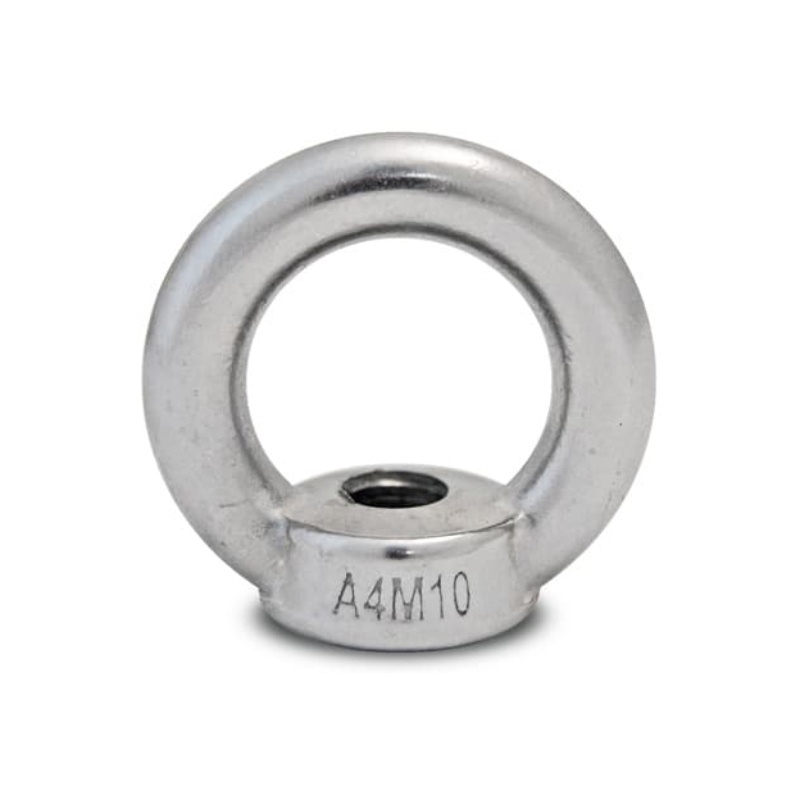
What Is a Lifting Eye Nut?
A lifting eye nut is a ring-shaped fastener with an internally threaded base. It screws onto a compatible male thread, such as a stud, threaded rod or machine shaft, to create an attachment point for lifting slings, hooks or shackles. Unlike an eye bolt, which has an external threaded shank, an eye nut uses a female thread.
DIN 582 is one of the most widely recognized dimensional references for metric lifting eye nuts. Buyers should still confirm the exact drawing, material grade, working load information and inspection documents required for their market and application.
Common Sizes and Thread Requirements
Common metric lifting eye nut sizes include M6, M8, M10, M12, M16, M20, M24, M30 and larger diameters. The correct size must match the male thread exactly, including thread diameter and pitch. The mating thread should be clean, fully formed and long enough to provide complete engagement without bottoming out incorrectly.
- Metric thread size and pitch
- Internal thread tolerance
- Ring inside diameter and outside diameter
- Base diameter and total height
- Available thread engagement
- Required working load and load direction
- Applicable standard, drawing and marking
Materials and Surface Finishes
Carbon steel eye nuts are widely used for general industrial lifting points and can be supplied with self-color, zinc plated or hot-dip galvanized finishes. Zinc plating offers a clean appearance and basic corrosion protection for indoor or mildly exposed environments. Hot-dip galvanizing is commonly selected for outdoor construction and infrastructure.
Stainless steel lifting eye nuts, including common A2 and A4 grades, are used where corrosion resistance is important. A4 stainless steel is frequently considered for marine, coastal, food-processing and chemical environments, subject to the required load and certification conditions. Material markings should be checked against the purchase specification and supporting documents.
Typical Applications
- Machinery installation and maintenance
- Mold, die and tooling handling
- Steel fabrication and construction assemblies
- Industrial equipment lifting points
- Marine and offshore hardware
- Warehouse and material handling systems
- Temporary suspension and positioning tasks
Installation and Safe Use
Before installation, inspect the eye nut for cracks, deformation, corrosion, damaged threads or illegible markings. Confirm that the supporting stud or threaded component has suitable strength and that the contact surface is flat. Screw the eye nut down completely so the base seats firmly against the supporting surface.
Standard eye nuts generally perform best with a straight axial load. Side loading, shock loading and multi-leg sling angles can reduce allowable capacity and may require a different lifting point design. Do not insert bars through the eye to force tightening, and never exceed the rated capacity provided for the exact product and installation condition.
For lifting people, overhead lifting or other safety-critical operations, use only products specifically approved and certified for that purpose. The lifting plan, inspection interval and installation method should follow applicable regulations and qualified engineering guidance.
Quality Inspection Points
- Thread gauge inspection for size and fit
- Material verification and heat identification
- Dimensional inspection against the approved drawing
- Surface finish and corrosion-protection checks
- Visual inspection for casting or forging defects
- Marking, traceability and packaging verification
- Proof testing or third-party testing when specified
Bulk Buying Checklist for Importers
A complete RFQ reduces quotation delays and prevents unsuitable substitutions. Overseas buyers should provide:
- Product type and required dimensional standard
- Thread size, pitch and quantity for each size
- Carbon steel, A2 stainless steel, A4 stainless steel or another material
- Surface finish and corrosion-resistance requirement
- Working load, test certificate and traceability requirements
- Logo, marking, labeling and export packaging details
- Destination port and requested delivery schedule
SHENHUI supplies standard fasteners and industrial hardware for wholesale buyers and can evaluate custom dimensions, materials, markings, packaging and OEM requirements. Eye nuts can be sourced together with industrial nuts, threaded rods, bolts and related fastening components.
Frequently Asked Questions
What is the difference between an eye nut and an eye bolt?
An eye nut has a female internal thread and screws onto a stud or bolt. An eye bolt has a male threaded shank that screws into a tapped hole or receives a nut.
What does DIN 582 specify?
DIN 582 is a widely recognized dimensional reference for metric lifting eye nuts. Buyers should specify the required edition, material, load rating, marking and certification rather than relying on the standard number alone.
Can a lifting eye nut be side loaded?
Many standard eye nuts are intended primarily for axial loading. Angled or side loading can reduce allowable capacity and may require a swivel lifting point or another engineered solution.
Can SHENHUI supply custom eye nuts?
Custom thread sizes, materials, finishes, markings, packaging and OEM production can be reviewed according to drawings, samples, certification needs and order quantity.
Request a Lifting Eye Nut Quotation
Send your size list, material, finish, load and certification requirements, quantity and destination to SHENHUI. Our team will review standard supply and custom manufacturing options for your distribution or project order.